Iberian Peninsula · 5,5 h · Vegetarian · Dessert · For confident cooks
Flan de Naranja
In German: Karamellpudding mit Orange · In English: orange flan
For 6 servings · US units
Spanish orange custard with golden caramel, fresh juice and grated zest
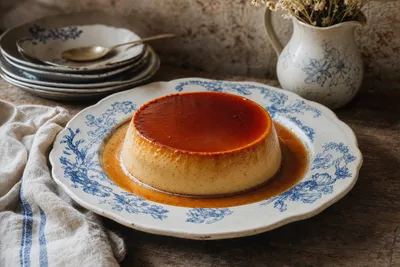
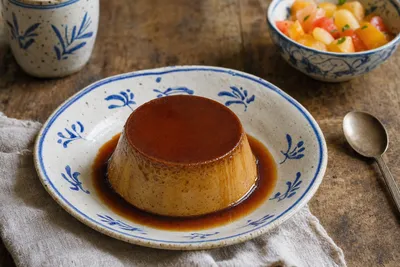
Flan de Naranja is often described as a Spanish orange custard. Instead of tasting only of milk and vanilla, it carries freshly squeezed juice and finely grated zest, with dark caramel running down the sides. It's thought of as a winter dessert for a simple reason: that's when oranges are at their best. It asks for a little patience because it needs a good long chill, but that's exactly what gives it such a smooth, sliceable texture.
Ingredients
- 7 ozsugarabout half for the caramel, the rest for the custard
- 3 tbspwaterfor the caramel
- 4eggsbeaten
- 3egg yolkin addition to whole eggs for a creamier texture (optional)
- 1½ cupsorange juicefreshly squeezed
- 1orangeunwaxed; zest finely grated, orange part only without the white pith
- 2⅛ cupsmilkfor the milk-based version, replaces part of the juice (optional)
- 7 ozstirred into the custard, then use less sugar (optional)Milk with most of its water removed and a large amount of sugar added, thick and very sweet.Substitute: It works well homemade: simmer about 500 ml whole milk with 150 g sugar over low heat, stirring, until reduced to roughly a third, which takes close to an hour. Evaporated milk stirred with sugar is sweet enough but much thinner and won't do for flan or dulce de leche.Read more
- 1 tspVanillaor the seeds of a vanilla pod (optional)
Method
- Make the caramelFor the caramel, put part of the sugar and the water in a small pan over medium heat and let it caramelise to a golden brown without stirring. At most, give the pan a gentle swirl.
- Coat the mould with caramelPour the hot caramel straight into a flan mould or individual ramekins, then tilt the mould, or each ramekin in turn, so the base and sides are coated. Leave the caramel to set, and meanwhile heat the oven to 150–355 °F.
- Zest the orange, squeeze juiceFinely grate the zest of the unwaxed orange, taking only the orange part and leaving the white pith behind, because the pith makes the custard bitter. Then squeeze the orange juice fresh.
- Mix the custardWhisk the eggs with the remaining sugar, adding the extra egg yolks if you like. Stir in the orange zest and orange juice and, depending on the version you're making, the milk or sweetened condensed milk, plus the vanilla extract or vanilla seeds. For the milk-based version, the milk replaces all or part of the orange juice; steep the zest in the warm milk beforehand.
- Strain and cover the custardPour the mixture through a fine sieve into the prepared mould or ramekins so it turns out silky smooth, then cover everything with foil.
- Bake in a water bathSet the mould in a deep baking dish or roasting tin, pour in water for a water bath, and bake the flan at 150–355 °F for about 35–60 minutes until set; ramekins need less time than one large mould. It's done when a knife or skewer pushed into the centre comes out clean.
- Cool and chill overnightLift the flan out of the water bath, let it cool, then chill it in the fridge for several hours, ideally overnight.
- Turn out the flanTo serve, run a knife around the edge, lay a plate on top and turn the flan out in one quick movement so the liquid caramel runs over it.
- Garnish with orangeFinish with orange slices or candied orange peel.
Tips and variations
If you want it as fruity as possible, make the custard with just eggs, sugar and orange juice and no milk at all. The gentler version is milk-based: the milk replaces all or part of the orange juice, and the orange flavour comes mainly from the zest, steeped in the warm milk beforehand; sweetened condensed milk or evaporated milk makes the flan especially creamy, so go easy on the sugar if you use them. A few drops of orange blossom water, a splash of orange liqueur or rum as they do in some areas, or a little juice in the caramel each give it their own note, and a little cornflour helps it hold together. No oven free? The flan also cooks in a water bath on the stovetop. It looks lovely turned out onto orange slices and topped with strips of homemade candied orange peel.
Allergens
Contains: Eggs
May contain if you use the optional ingredients: Milk (including lactose)
These notes follow from this recipe's ingredient list. Ready-made products and brands may contain further allergens — please check the packaging yourself.
Something not right?
This recipe was put together from independent sources and checked before publishing. Even so, a mistake can slip through — an amount that does not add up, a step that does not work as written. If you spot something, write to us: we will look into it and put it right.