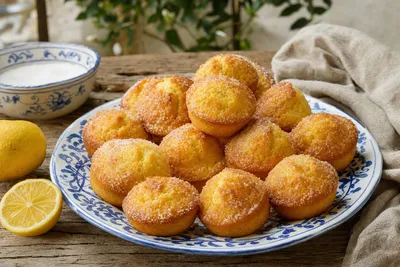
Lisbon & Estremadura · 90 min · Vegetarian · Baking · For confident cooks
Pastéis de nata
In German: Blätterteigtörtchen mit Eiercreme · In English: Custard tarts
For 12 servings · US units
Crisp, flaky pastry around a cinnamon-and-lemon custard, blistered dark in a hot oven
Pastéis de nata come from Lisbon and are counted among the most typical sweets in Portugal. What makes them is the contrast: shatteringly flaky pastry holding a custard scented with cinnamon and lemon zest, which picks up its dark, scorched spots in a very hot oven. You can bake them any time of year, and they're hard to beat while still warm.
Ingredients
- 8¾ ozpuff pastryfor the shells, chilled, about one sheet
- 1¼ cupsmilkfor the custard
- 5¼ ozsugarfor the syrup or custard
- ⅓ cupwaterfor the sugar syrup
- 4egg yolkfor the custard
- 1eggswhole, in addition to the yolks (optional)
- 1 ozwheat flourto thicken the custard
- ⅔ ozcornstarchto thicken the custard
- ½ cupcreamalongside or instead of part of the milk (optional)
- 1cinnamon stickfor flavouring, removed afterwards
- 1lemonzest strips only, for flavouring, removed afterwards
- 1 ozbutterfor brushing the pastry and greasing the tins
- ½ ozicing sugarfor dusting (optional)
- ground cinnamonfor dusting (optional)
Method
- Prepare the pastry logPreheat the oven to around 480 °F. Melt the butter, roll out the chilled puff pastry, brush it with some of the melted butter, roll it up tightly into a log and put it in the fridge to firm up.
- Make the cinnamon-lemon syrupFor the syrup, warm the water and sugar in a small pan with the cinnamon stick and the strips of lemon zest until the sugar has dissolved. Take it off the heat and let it cool, then fish out the cinnamon stick and lemon zest.
- Mix starch and heat milkWhisk the wheat flour and cornstarch with a little of the cold milk until there are no lumps. Heat the rest of the milk in a saucepan, together with the cream if you're using it.
- Thicken and add the syrupPour the flour-and-starch mixture into the hot milk and keep stirring until it thickens. Then stir in the cooled syrup until it's evenly combined.
- Add yolks and chill custardWork in the egg yolks a little at a time, along with the whole egg if you like; from here on the custard must not boil. Push it through a sieve if needed, press cling film directly onto the surface and chill it.
- Line the muffin tinsGrease the muffin tins with the remaining butter. Slice the pastry log into rounds, set one in each cup and press it up the sides with your thumbs right to the rim, so you get a thin base and tall walls.
- Fill and bake hotFill each pastry case about three-quarters full with custard and bake in the hot oven until the tops are browned and nicely blistered.
- Unmould and dustLet the pastéis cool a little, ease them gently out of the tin and, if you like, dust them with icing sugar and ground cinnamon.
Tips and variations
The custard is easy to play with: cream can go in alongside or instead of part of the milk, a whole egg can go in on top of the yolks, and some people only add the eggs once the custard has cooled completely rather than into the warm mixture. Instead of slicing the pastry log you can cut out circles, and if you have the time, make your own puff pastry. Lemon extract works in place of the zest. If a blazing 250 °C oven makes you nervous, bake at a more moderate 180 °C. They're best eaten still warm, freshly dusted with cinnamon and icing sugar.
Allergens
Contains: Eggs, Cereals containing gluten, Milk (including lactose)
These notes follow from this recipe's ingredient list. Ready-made products and brands may contain further allergens — please check the packaging yourself.
Something not right?
This recipe was put together from independent sources and checked before publishing. Even so, a mistake can slip through — an amount that does not add up, a step that does not work as written. If you spot something, write to us: we will look into it and put it right.